
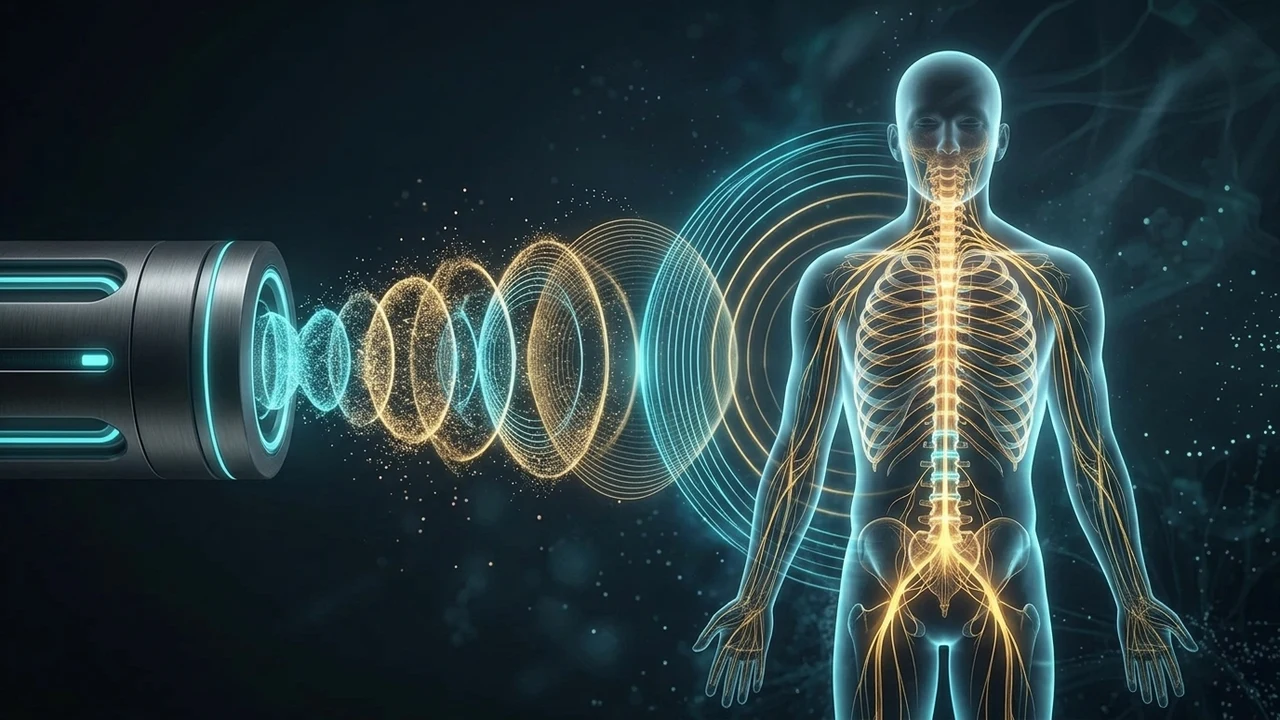
1. Noticeably Faster Response and Shorter Metatherapy Session Windows
Feedback from integrative practitioners who have upgraded from classical first-generation non-linear systems (NLS)—such as standard Meta Hunter headset units—to advanced Biophilia-class architectures paired with an integrated Tesla (scalar) generator converges first on speed and responsiveness.
In the theoretical wave model used by scalar-assisted bioresonance systems, a longitudinal scalar field propagates without the radiative thermal losses typical of standard transverse electromagnetic signals. In everyday clinical workflow, therapists observe that energetic coupling between the system and the client stabilizes substantially faster.
- Smoother real-time scanning acquisition: During the diagnostic-orientation scan itself, practitioners report that spectral acquisition proceeds more fluidly, with fewer stalls or erratic sensor fluctuations across anatomical categories.
- Condensed metatherapy exposure times: Individual metatherapy intervals can be noticeably shorter because the regulatory field registers the informational signal in significantly less time than with legacy inductive headsets alone.
- Reduced practitioner & client fatigue: Shorter, cleaner transfer cycles allow practitioners to focus on priority regulatory areas rather than running prolonged, repetitive correction loops that can fatigue sensitive individuals.
2. Deeper Autonomic Relaxation and Subjective "Neural" Client Feedback
One of the clearest differences between classical NLS hardware and scalar-integrated systems appears in how clients subjectively experience a session in the room.
With conventional trigger headsets (Meta Hunter), clients commonly feel only a faint acoustic hum from the headphones or nothing physical at all. By contrast, when practitioners engage an integrated Tesla scalar field—via localized applicators, inductive plates, or a resonant chamber—clients frequently report distinct sensory and autonomic shifts within the first few minutes:
- Rapid parasympathetic shift: Clients routinely describe a wave of deep physical calm, slower breathing, and released muscular tension as the autonomic nervous system transitions from sympathetic stress dominance into parasympathetic (vagal) rest-and-digest recovery.
- Subtle somatic and thermal perception: Many individuals notice gentle micro-tingling, light oscillatory warmth, or a sense of localized circulation in the specific body regions currently addressed by the protocol.
- Enhanced receptivity to restorative routines: Entering a calm parasympathetic baseline early in the consultation helps settle heart-rate variability and stress-driven signal noise, making subsequent wellness observations more repeatable.
3. Higher Consistency in Remote Sessions Using the Resonance Matrix Chamber
Among practitioners who conduct remote wellness sessions (Remote Sessions) using biological samples—such as hair strands, nail clippings, or saliva swabs placed inside the system’s resonance matrix chamber—the most frequent praise concerns the repeatability of longitudinal tracking.
In bioresonance theory, coupling the matrix chamber with a Tesla scalar field and non-local informational correlation (often framed through quantum entropic logic) is described as establishing a more direct, "live" connection with the energetic signature of a person who is not physically present in the clinic.
- Stronger baseline-to-follow-up continuity: Practitioners note that follow-up checks performed over multi-week remote programs display more coherent, step-by-step improvement trajectories rather than random day-to-day scatter.
- Sample integrity inside the matrix chamber: Shielded cylindrical matrix chambers isolate the biological specimen from ambient room electromagnetic interference while focusing the scalar carrier field directly across the sample container.
- Structured hybrid care: This consistency makes remote matrix-chamber workflows particularly practical for international clients or homebound individuals who combine periodic in-depth reviews with ongoing daily lifestyle habits.
4. Stronger Transient "Herxheimer-Like" Clearing Responses Under Destructive Interference
Higher energetic efficiency is not purely an advantage if applied uncritically—it also demands greater clinical respect and dosing precision. When practitioners run inverted frequency protocols (destructive interference aimed at dampening microbial, parasitic, or toxic burden signatures), the waveform delivered through an integrated Tesla scalar module is cleaner and energetically more concentrated.
Because of this heightened signal intensity, experienced therapists highlight an important operational caution:
Understanding transient regulatory and clearing reactions
Practitioners warn that client clearing responses—commonly referred to in integrative practice as a Herxheimer-like effect, characterized by temporary fatigue, mild heaviness, transient headache, or brief symptom intensification attributed to rapid pathogen breakdown and metabolic mobilization—can be noticeably stronger than with a classical Meta Hunter unit.
Why precision dosing is mandatory for sensitive clients
More is not better when working with scalar-amplified destructive interference. Sensitive clients, elderly individuals, or those with sluggish detoxification and drainage pathways require carefully titrated exposure durations, fewer simultaneous inverted targets per session, and deliberate recovery intervals.
5. More Durable Informational Preparations (Water & Matrix Drops)
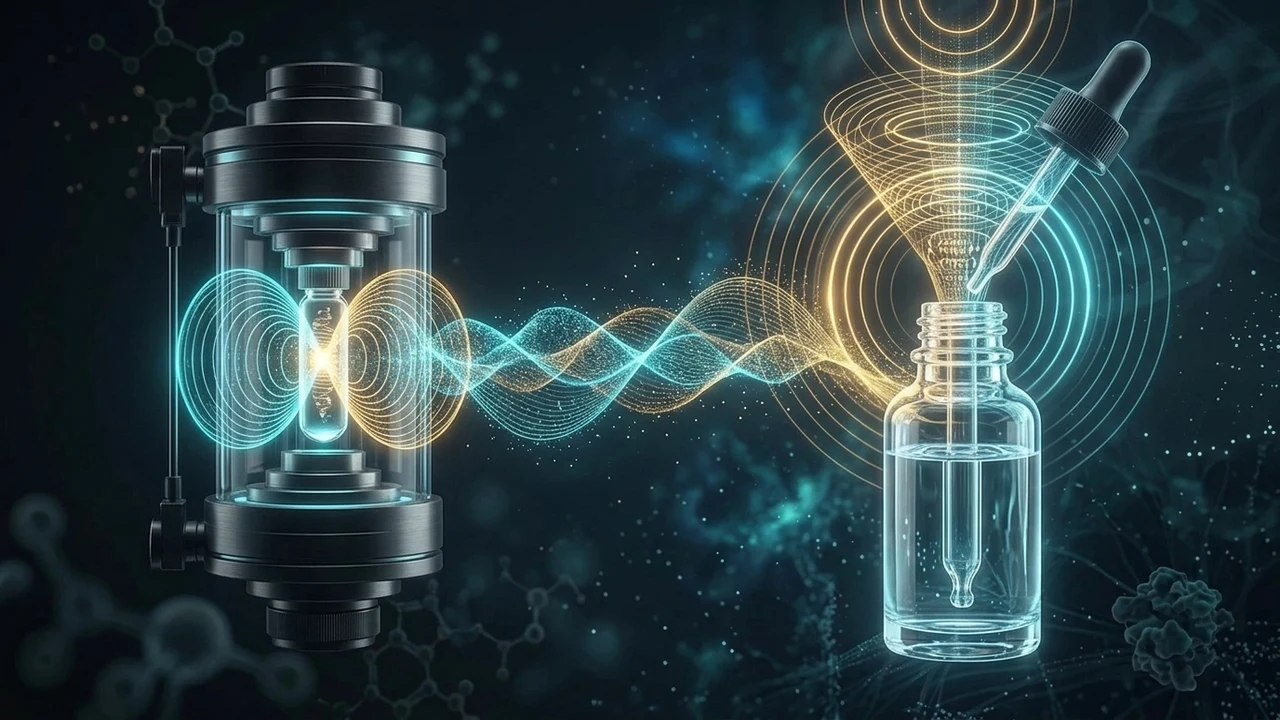
A fifth consistent observation involves the preparation of informational carrier media—such as structured water, saline-mineral solutions, or homeopathic-style hydro-alcoholic drops—imprinted inside the resonance matrix chamber.
Therapists report that informational drops prepared with scalar-module coupling appear to retain their coherence and energetic charge over a longer shelf window, while clients report a steadier, more sustained supportive effect during the days or weeks between scheduled consultations.
| Operational Dimension | Classical Headset-Only NLS (Legacy Hunter Class) | Biophilia-Class NLS + Integrated Tesla Scalar Module |
|---|---|---|
| Signal coupling & session duration | Standard inductive headset coupling; longer metatherapy loops often required for noticeable shift. | Longitudinal scalar coupling with minimal thermal loss; faster scan response and shorter metatherapy windows. |
| Client subjective & autonomic response | Usually limited to faint headphone audio tones; minimal immediate physical sensation. | Frequent rapid parasympathetic calm, gentle localized warmth, or subtle micro-tingling within minutes. |
| Remote sample workflow (Matrix Chamber) | Higher sensitivity to ambient noise; greater variability between remote follow-up checks. | More direct coupling with hair, nail, or saliva samples; steadier longitudinal trend continuity. |
| Destructive interference & clearing load | Gentler inverted signal intensity; lower likelihood of pronounced post-session clearing fatigue. | Cleaner, denser inverted waveform; requires careful time titration to prevent strong Herxheimer-like overload. |
| Informational water & drop stability | Shorter perceived retention window; carrier drops often require more frequent refreshing. | Longer perceived charge stability in matrix-imprinted drops and steadier between-session client support. |
6. A 4-Step Protocol for Safe Scalar Pacing, Hydration, and Sensitive-Client Care
To harness the speed and depth of an integrated Tesla scalar module without overwhelming a client’s self-regulatory capacity, QMH recommends a disciplined 4-step practitioner workflow:
- Titrate initial exposure duration (Start Low, Go Slow): For first-time or energetically sensitive clients, reduce scalar metatherapy exposure time by 30% to 50% compared with legacy headset habits—especially when running inverted (destructive interference) protocols.
- Prioritize parasympathetic stabilization before destructive interference: Begin sessions with harmonic supportive (constructive) frequencies to calm autonomic tone and open microcirculatory pathways before introducing targeted inverted waveforms.
- Enforce pre- and post-session mineral hydration: Have the client drink pure water with balanced electrolytes before and for 48 hours after the session to support renal and lymphatic clearance of mobilized metabolic byproducts.
- Respect biological recovery intervals between sessions: Allow 48 to 72 hours for transient regulatory ripples to settle before repeating intensive inverted protocols, using stabilized matrix drops for gentle daily continuity in the interim.
7. Biophysical Context, Evidence Boundaries, and How QMH Tests Practice Observations
At Quantum Meta Health, we believe readers and practitioners deserve total transparency about what is established physiology, what is practitioner observation, and what remains an open scientific question.
- Physiologically measurable relaxation: The transition into parasympathetic (vagal) dominance reported during scalar-assisted sessions can be observed directly through standard physiological markers such as heart-rate variability (HRV), respiratory rate, peripheral skin temperature, and galvanic skin response.
- Theoretical scalar and non-local models: Concepts such as longitudinal Tesla scalar waves, quantum entropic logic, and non-local biological sample entanglement originate from theoretical biophysics and NLS developer literature rather than mainstream clinical physics. They serve as working conceptual models for practitioners.
- QMH’s blinded validation commitment: In accordance with QMH’s scientific standards, practitioner observations regarding remote matrix-chamber repeatability and carrier imprint stability are stated plainly as real-world practice observations—and are slated for rigorous evaluation under QMH’s pre-registered, blinded sample-matching and clinical comparison studies.